Young, Fit, and Gone Too Soon: Why We Need the Art of Doing Nothing
Aniruddha Thatte
Author: Aniruddha Thatte
Over the last few years, a deeply unsettling narrative has unfolded across India. Just a few days back, a 25-year-old runner died of a suspected heart attack during the Indore Marathon.
Young adults in their twenties and thirties are collapsing suddenly from heart attacks and strokes. These are not typically “unhealthy” individuals. Many were physically active. Some were athletes. Others followed disciplined routines, exercised regularly, and appeared to be the very image of vitality.
Yet, in a heartbeat, they are gone.
This is no longer an isolated anomaly or a social media exaggeration. Hospitals, cardiologists, and newsrooms are all pointing to the same uncomfortable truth: serious cardiovascular events are increasingly striking the young adults.
A Shift in the Paradigm
Traditionally, heart attacks and strokes were viewed as the ailments of old age. Today, the demographic has shifted drastically. Neurologists report that nearly one in five stroke patients in India is under 45. Cardiologists are treating sudden cardiac arrests in patients with no prior history of heart disease.
Recent headlines paint a haunting picture:
- Young police aspirants collapsing during fitness tests.
- Athletes passing away mid-game.
- Gym-going professionals falling unconscious without warning.
These were people who supposedly did “everything right.” This forces us to confront an urgent question: What are we missing?
The Elephant in the Room: The COVID Factor
It is impossible to discuss this trend without acknowledging the shadow of COVID-19.
The pandemic fundamentally altered our biological and social reality—changing our routines, stress baselines, and sense of safety. It also introduced mass vaccination programs, which saved countless lives but left behind lingering public anxiety.
It is valid to acknowledge concerns about the long-term effects of vaccines, especially as the timeline of these sudden deaths correlates with the post-pandemic era. However, large-scale studies by major Indian medical institutions have found no direct evidence linking COVID vaccines to this rise in sudden cardiac deaths.
Instead, research increasingly points to the infection itself. Even mild COVID-19 cases have been linked to long-term inflammation and vascular damage. The pandemic’s impact on our hearts appears to be indirect, complex, and still unfolding.
The Toxic Cocktail: Stress, Pollution, and ‘Hustle’
What makes this trend so disturbing is that fitness does not always equal resilience. You can have strong muscles and a weak heart if invisible risk factors are constantly at play.
1. Living in a Permanent State of Urgency
Today’s young adults operate under a crushing load of pressure:
- Career Uncertainty: The fear of irrelevance in a fast-changing economy.
- Hyper-Connectivity: Endless notifications and the inability to switch off.
- Financial Stress: The burden of rising costs and responsibilities.
This chronic stress keeps the body in a prolonged “survival mode” (fight or flight). Over time, high cortisol levels quietly damage blood vessels, disrupt sleep, and strain the heart muscle—damage that a treadmill run cannot undo.
2. Breathing Poison
Air pollution in Indian cities is among the worst in the world. Fine particulate matter (PM2.5) enters the bloodstream, triggering inflammation that increases the risk of heart attacks and strokes, even in younger, non-smoking populations.
3. The Loss of Community
There is also a social shift worth reflecting on. Joint families once provided “emotional cushioning”—shared worries, shared meals, and built-in support systems. As nuclear households become the norm, many young adults face high-pressure situations in isolation. Loneliness may not show up on an ECG, but its effects on heart health are deeply physical.
The Solution: The Art of Doing Nothing
Note: This is not medical advice, but a necessary human observation.
Modern life fetishizes busyness. We treat rest as laziness and stillness as a waste of time. But the human body was never designed for constant, high-wire alertness.
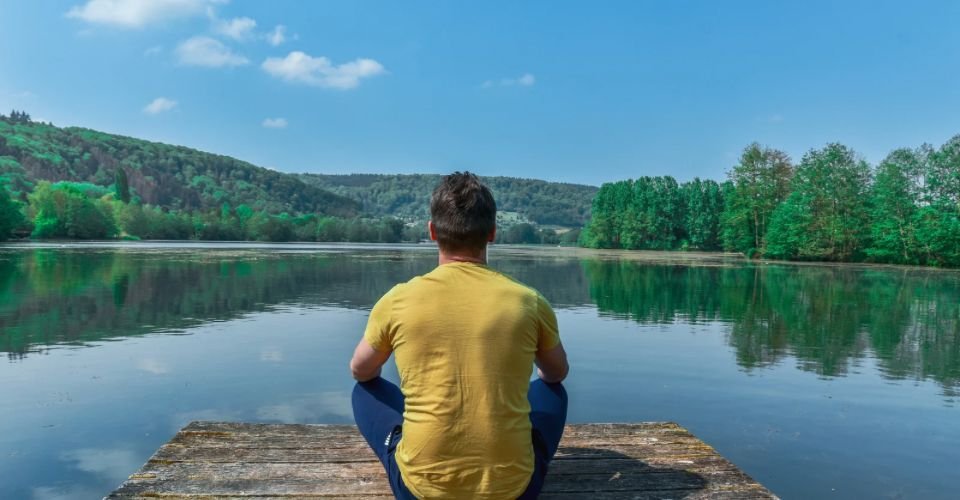
Perhaps the radical self-care we need right now isn’t another supplement or a harder workout. It is the Art of Doing Nothing.
- Breaking the Routine: Stepping off the hamster wheel, even for an hour.
- Embracing Boredom: Allowing the mind to wander without a screen.
- Guilt-Free Idleness: Sitting still without a purpose or a goal.
These are not indulgences; they are biological resets. In a world obsessed with optimization, the most effective way to save your heart might just be to pause.
Recovery Matters as Much as Effort
There is no single culprit behind the rise of early cardiac deaths in India. It is likely a tragic convergence of post-pandemic inflammation, environmental toxicity, lifestyle imbalance, and chronic stress.
This moment calls for nuance, not panic. It calls for awareness, not denial.
Youth is resilience, but it is not invincibility. If there is one lesson to take away, it is this: A life constantly in motion eventually forgets how to recover.
Sometimes, the most productive thing you can do is absolutely nothing.